Our findings should encourage sport managers to use strategic service-related actions within their operations to positively influence the deep and long-lasting relationships between Season Ticket Holders and a sports team.
Read MoreOur findings should encourage sport managers to use strategic service-related actions within their operations to positively influence the deep and long-lasting relationships between Season Ticket Holders and a sports team.
Read MoreThis research generates knowledge on the development of consumer-based brand associations of new sport brands over time, highlights contextual differences between brands, and demonstrates the impact of star players on teams within sport brand architecture.
Read MoreUnderstanding the role of the league brand on consumers’ support for individual teams is important for the successful management and marketing of both leagues and teams. In the current research, brand architecture and brand association literature are integrated to examine the role of the league brand on the relationship between the team brand and team-related behavior. Data from an online survey of professional soccer league consumers (N = 414) were analyzed using structural equation modelling with bootstrapping procedures. The relationship between the team brand and team-related behavior was partially mediated by the league brand. Findings of this research contribute new knowledge by empirically demonstrating that characteristics of the league brand have an influence on team-related behavioral intentions. Furthermore, we contribute a different analytical approach for brand association research using formative indicators to measure team and league brand associations. In the managerial implications we outline how league managers can support individual teams, and how team managers can leverage off the league brand to attract consumers. Keywords: Brand Architecture; Brand Associations; Brand Relationship; Sport League; Formative Models; PLS Get your copy here: https://thilokunkel.com/files-by-email/?file=451
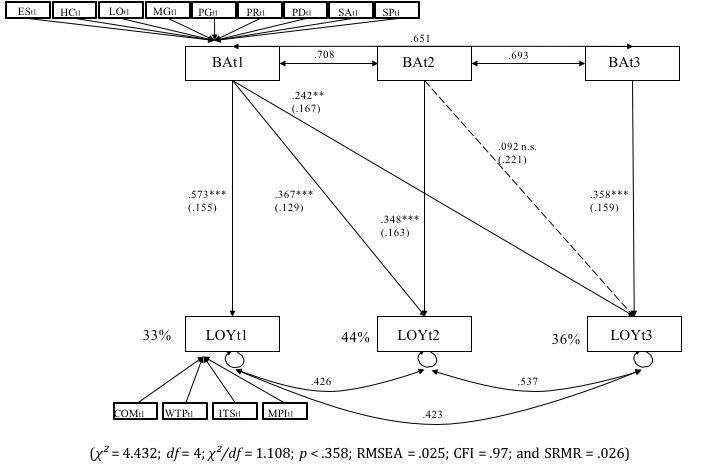
Read MoreIn its simplest form, a brand can be considered a name, symbol, design, trademark or a combination of all of the above that serves the purpose of distinguishing one product or service from another. Ultimately brand awareness and brand image influence brand success. The brand awareness component is related to the ability of consumers to identify the brand from their memory under different conditions. Brand image refers to the perceptions about a brand as reflected by the brand associations held in consumer memory. Brand associations represent any attribute or benefit linked to a brand as perceived by a consumer. These associative links refer to tangible (Bayern Munich has a modern stadium) and intangible (watching Bayern Munich play helps me get away from my daily routine) descriptors the consumer links to the brand. Brand associations provide indicators to consumer knowledge of the brand (what I know about Bayern Munich) and the perceived favorability associated with a brand (I like Bayern Munich), and therefore influence brand selection and consumption (I own Bayern Munich merchandise and watch games). Below is an overview of my projects related to sport teams: My research has investigated brand associations of sport teams. In this research project, published in the Journal of Sport Management, my co-authors and I explored the development and stability of team brand associations and their influence on consumer loyalty. Analysis of longitudinal data indicates that brand associations can be developed through marketing communications without experiencing the team play competitive games. Furthermore, brand associations change based on changes of the environment (e.g., a new stadium), and they influence consumer loyalty in the future. Overall, this research project provides sport managers with insights on the development and change of brand associations new consumers link with sport teams. Kunkel, T., Doyle, J.P., Funk, D.C., Du, J., & McDonald, H. (In Press). The development and change of brand associations and their influence on team loyalty over time. Journal of Sport Management. (ABDC List: A*) My research has investigated consumer perceptions of sport teams. In this research project, published in Sport Management Review, my co-authors and I explored the differing perceptions and identity responses that potentially exist in relation to one non-profit community sport organization (identification, apathy and disidentification). Results indicate that consumers’ existing values and beliefs, shared community values, local players, organizational practices and sport interest varied based on perception of organizational image and consumer identity. Findings show that understanding specifically what a sport organization’s audience expect is fundamental, if it is to be perceived as legitimate in relation to its purpose. Therefore, sport organizations should spend time understanding the values and beliefs that make them relevant to their audience. The organization examined in this research utilized the findings of this study to adjust their management approach and marketing messages. Lock, D., Filo, K., Kunkel, T., & Skinner, J. (2013). Examining dimensions of legitimacy in community sport organisation, Sport Management Review, 16, 438-450 (ABDC List: A) My research has investigated sport team legitimacy. In this research project, published in the Journal of Sport Management, my co-authors and I developed the Capture Perceptions of Organizational Legitimacy (CPOL) framework, which is a three-stage process to measure the perceived dimensions on which constituents scrutinize a sport organization’s legitimacy. In stage one, the organizational context is defined to establish the classification, purpose, and relationship of the focal entity to its constituents. In stage two, qualitative data is collected to identify the perceived dimensions on which constituents scrutinized organizational actions. In stage three, a quantitative questionnaire is distributed to test perceived dimensions, which emerged during stage two of the CPOL framework. The framework provides researchers and practitioners with a context-driven process to measure consumers’ judgement of sport organizations. Lock, D., Filo, K., Kunkel, T., & Skinner, J. (2015): The development of a framework to Capture Perceptions of Sport Organizations Legitimacy, Journal of Sport Management. 29 (4), 362-379 (ABDC List: A*)
Read MoreBrand architecture describes the structure of an organization’s portfolio of brands and the relationship between these brands as perceived by the consumer. Specifically, brand architecture is determined by consumers’ perceptions of management, design, and structure of brands that are in a relationship with one another that can be found in a portfolio of brands. Brands can be structured on a continuum between a house of brands and a branded house. In a branded house, the master brand name is closely linked to all subbrands (e.g., the subbrands Virgin Mobile and Virgin Media are linked to the master brand Virgin). In contrast, a house of brands has limited or no linkage between the master brand name and its major brands (e.g., the subbrands Ariel and Charmin are not visibly linked to the master brand Procter & Gamble). Between these approaches, mixed-branding strategies are common and spill-over effects of consumers’ perceptions occur between brands in the portfolio. Most sport entities (e.g., leagues, teams, athletes) are positioned in a mixed-branding portfolio. For example, what consumers think of the league influences their perception of the teams within the league, and vice versa. This relationship is presented in the figure below. My research has investigated sport brand architecture. In this research project, published in the Journal of Sport Management, my co-authors and I examined drivers of consumer involvement and brand loyalty with professional sport leagues and teams. Results revealed that leagues and teams were in a co-dominant relationship with one another. Three different sport consumer relationships were identified and confirmed within sport brand architecture. The relationships were league dominant, team dominant, and co-dominant. The co-dominant relationship was identified as the most common brand relationship with consumers being equally involved with their favorite league and their favorite team. Findings of this research can be utilized to improve the management and marketing of leagues and teams through leveraging their brand relationship, which subsequently may increase consumer loyalty with both brands. Kunkel, T., Funk, D.C., & Hill, B. (2013). Brand architecture, drivers of consumer involvement, and brand loyalty with professional sport leagues and teams. Journal of Sport Management, 27(3), 177-192. Get this article via email: My research has examined the influence of the league brand on consumers’ connection with their favorite team. In this research project, my co-author and I examined how brand associations linked with a league influence consumers’ team identification and team-related consumption. Findings of this research support that consumers’ perceptions of the league brand influence their identification with their favorite team and their team-related behavioral intentions. This research has implications on the management and marketing of the relationship between leagues and their affiliated teams. This research is currently in review.
Read MorePep Guardiola and Bayern Munich have a chance to repair the damage that the game against the MLS Allstars has left on their brand image. The German club has opened an office in New York City to “increase its stateside fan base and strengthen the position of its brand, product and philosophy in the U.S. market,” according to Jörg Wacker the club’s executive board member for internationalization and strategy. Bayern Munich has received extensive media coverage in the last three years because of their attractive style of play and their success in the UEFA Champions League. However, the positive image that fans formed about the German heavyweight has received some dents in their recent game against the Major League Soccer (MLS) All-Stars. The game ended 2:1 for the MLS All-Stars, but it was not the loss that had tarnished Bayern’s brand image, but the fact that Pep Guardiola refused to shake hands with Caleb Porter after the game, because of fouls committed against Bayern Munich players. Instead of shaking hands, Guardiola wagged his finger at the coach of the MLS All-Stars (see picture above). Pep Guardiola stated that he didn’t see Porter (the finger wag seems pretty obvious to me) and US Soccer president Sunil Gulati tweeted that everything was “All good with Pep Guardiola and Caleb Porter” (see tweet on the left). However, US soccer supporters were angered by the gesture. One comment that represents the sentiment of many other soccer supporters (see the 116 likes) states: “The MLS should not invite Bayern back next year or any year until that [curse word] coach is gone. That act of un-sportsmanship should not be rewarded with a return trip to the states for Bayern to build their marketing arm in the US. Suffer the consequences of your coaches’ actions…” (see picture below). Here is also a link to an original article posted by the MLS: MLSsoccer.com A video posted by Caleb Porter has given Pep Guardiola to repair the negative impact his behavior had on the Bayern Munich brand image. Porter has nominated Pep Guardiola to complete the #IceBucketChallenge to support the ALS Association. The Ice Bucket Challenge involves dumping a bucket full of ice water over ones head and then nominating other people to follow lead. After he had a bucket full of ice water dumped over his head (see picture below), Porter nominated Jürgen Klinsmann and Pep Guardiola. Now they have 24 hours to complete the challenge or make a donation to the ALS foundation who support scientific research to find a cure for Amyotrophic Lateral Sclerosis. For the video click this link: SBNation By accepting the nomination, Pep Guardiola can regain respect from US soccer supporters and repair the damage done in the MLS All-Star game. However, for best results here is some advice to approach the challenge: Don’t just dump a bucket of ice water, sit in a pool of ice water. Hold a colorful cocktail, yes, with little umbrella (a little self-mockery never hurts). Wag your finger at Porter (ironically) while saying “na na na, Caleb, Mir san Ice Bucket Challenge”. Nominate Osvaldo Alonso and Will Johnson (the two players who committed the fouls in the All-Star game. State that you are square with Porter now. Have the pool sponsored by one of the club sponsors who donates X amount of dollars to the ALS Association. State that this sum will support the fight against ALS. Publish the video on the webpage and all social media channels. Use hashtags plenty of hashtags, such as #IceBucketChallenge #ColdAsIce #ALS, and twitter handles to reply to Celeb Porter’s video. Dear Pep Guardiola and Bayern Munich, you have just regained the respect and appreciation of 93% of all US soccer supporters, the remaining 7% probably support Borussia Dortmund.
Read MoreThinking about the same things differently: Examining perceptions of a non-profit community sport organisation (Lock, D., Filo, K., Kunkel, T., & Skinner, J.) Sport Management Review (ERA ranked: A) This paper explores the differing perceptions and identity responses (identification, apathy and disidentification) that potentially exist in relation to one non-profit Community Sport Organisation (CSO), and whether they explain variations in individuals’ existing values and beliefs, sport interest, community identification and views about one organisation’s legitimacy. Data were collected using a quantitative online survey (n = 390), then analysed using Confirmatory Factor Analysis (CFA) and Multiple Analysis of Variance (MANOVA) to test three hypotheses investigating whether existing values and beliefs, shared community values, local players, organisational practices and sport interest varied based on perception of organisational image and identity response. Based on the contributions of this study, non-profit CSOs should spend time developing understanding of the key dimensions that make them relevant to constituents and to decipher the values and beliefs that underpin what external audiences expect from organisations. In addition, understanding specifically what a CSO’s audience expects is fundamental if the organisation is to be perceived as legitimate in relation to its purpose. Send an email to receive a copy of the article.
Read MoreSports spectator segmentation: Examining the differing psychological connections amongst spectators of leagues and teams (Doyle, J. P., Kunkel, T., & Funk, D. C., 2013). International Journal of Sport Marketing and Sponsorship. (ERA ranked: B) The results from this study extend previous research by empirically testing the involvement based Psychological Continuum Model (PCM) segmentation procedure on sports spectators. To date, the procedure has only been verified using sports participants, although the PCM was developed with a broader range of sports consumers in mind. The validity of the procedure is confirmed using two online surveys, which gather data from spectators at both the league (n=761) and team (n=623) level. A three-step segmentation procedure then places respondents into the PCM stages – awareness, attraction, attachment and allegiance. ANOVA tests indicate that the four groups significantly differ from one another on attitudinal and behavioural measures for both league and team spectators. Findings suggest that the PCM is an appropriate framework to investigate fan development at both league and team levels. Thus sports marketers are provided with a research segmentation tool capable of helping them to better understand their heterogeneous consumer bases and thus guide marketing decisions.
Read More“Neil Henry, coach, Cowboys says the handling of doping allegations is a ‘disgrace’. The Cowboys are one of six clubs named in last week’s ACC report into doping in sport. The club has not been audited and was reportedly mentioned only in relation to current players’ past clubs. Henry says ‘it is embarrassing for the NRL to mention that there are six teams’. Henry says that the allegations have been a slight on the club and its fans. NSW police are looking at a league game played in Sydney, suspected of match-fixing. Dr Thilo Kunkel, Griffith University says that more scandals detract from the economic success of the league. John Fahey, president, WADA says that ‘blood passports’ need to be introduced for players.” (TEN News at 5pm – 13/02/2013 5:145pm: Audience: 160,000 viewers). “Dr Thilo Kunkel, Researcher, Griffith University, says the way the NRL and other governing bodies respond to allegations of drug abuse following the ACC investigation will largely determine the future prosperity of their sporting codes. Kunkel interviewed hundreds of soccer, rugby league and Australian rules fans in a project looking into perceptions of football leagues.” (ABC Gold and Tweed Coasts (Gold Coast) 06:30 News – 14/02/2013 6:32 AM) “Dr Thilo Kunkel, Researcher, Griffith University, supports a call by the president of the World Anti-Doping Authority for leading Australian footballers to have biological passports. Kunkel interviewed hundreds of soccer, rugby league and Australian rules fans in a project looking into perceptions of football leagues. Kunkel says biological passports would help restore fans’ faith in various codes as they deal with allegations.” (ABC Gold and Tweed Coasts (Gold Coast) 07:30 News – 14/02/2013 7:33 AM) “Dr Thilo Kunkel, Researcher, Griffith University, says football codes should not panic over ACC findings and allegations of widespread doping. He suggests the quality of leadership can determine the size and strength of the fan base retained during a crisis.” (ABC Gold and Tweed Coasts (Gold Coast) 08:30 News – 14/02/2013 8:31 AM)
Read MoreLeagues undermined when clubs play dirty written by Stephen O’Grady February, 13th, 2013 “As six NRL clubs slipped into the glare of the Australian Crime Commission’s spotlight this week, so too did their parent league. The fate of clubs like the North Queensland Cowboys, Manly Sea Eagles and Newcastle Knights in the days and weeks ahead will have a bearing on public perceptions of the National Rugby League. The NRL’s leadership – or lack of leadership – during the fallout from the ACC investigations will also have a major bearing on fans’ perceptions of its member clubs – not only those under investigation – and their likelihood to attend games and emotionally commit during the forthcoming season. This connection between the parent league and its member clubs may seem the most obvious of links but it is one that has not been academically investigated or established previously. A Gold Coast-based researcher at Griffith University’s Department of Tourism, Sport and Hotel Management has now confirmed the major influence a parent league has on its constituent clubs, and vice versa. Fans of the NRL, AFL, A-League and English Premier League participated in the four-year research project, which involved in-depth interviews, two online questionnaires eliciting more than 1600 responses and consultation with online A-League fan forums which involved 420 respondents. The final stage of the research focused solely on soccer’s A-League where Dr Thilo Kunkel engaged with online fan forums around Australian to study the influence of the A-League on clubs and how this influence extended to the consumers’ perception of the teams in the league. The attitudes of fans were studied in relation to the league and in relation to the team, as was the social acceptability of supporting a team, and the fan’s capacity – through time and money – to support their team by attending their games. “The first major finding of the research is the strong influence a league has on the marketing and strategic brand management of teams in that league,” German-native, Dr Kunkel, says. “The league has a major bearing on the attitude of fans towards teams within the league. “If a league is going well, its teams tend to go well. If the league is not going so well, the teams tend not to go so well. The connection works the other way too. Teams are representative of their league, notably when they do well. “By the same token a scandal around a team or an individual player within a team has a bearing on the league and, by extension, on the rest of the teams in the league. “This may come be borne out during the weeks ahead as teams are publicly scrutinised in relation to drugs and corruption in sport. The intrinsic connection means the league and other member teams will be impacted if one or more teams are in the news for the wrong reasons. “The second major finding of my research is that it is very important for a league to provide a brand framework and brand alignment structure for the teams in the league. The teams can build and market themselves using this, while also establishing their own brand by differentiating themselves from other teams and building their own unique identity. “The third significant finding shows the league has a major influence on attitudes towards teams and whether fans attend club games. The league plays a big part in this through its strategic involvement in areas like match schedules, stadium lease contracts, and guidelines on how teams should treat their fan bases. “The league needs to guide its teams’ match-day management and marketing. The teams need to not only make it convenient and affordable for people to attend a game but also communicate this to their fans. This will boost game attendance, which will help both the teams and the league.”
Read More